
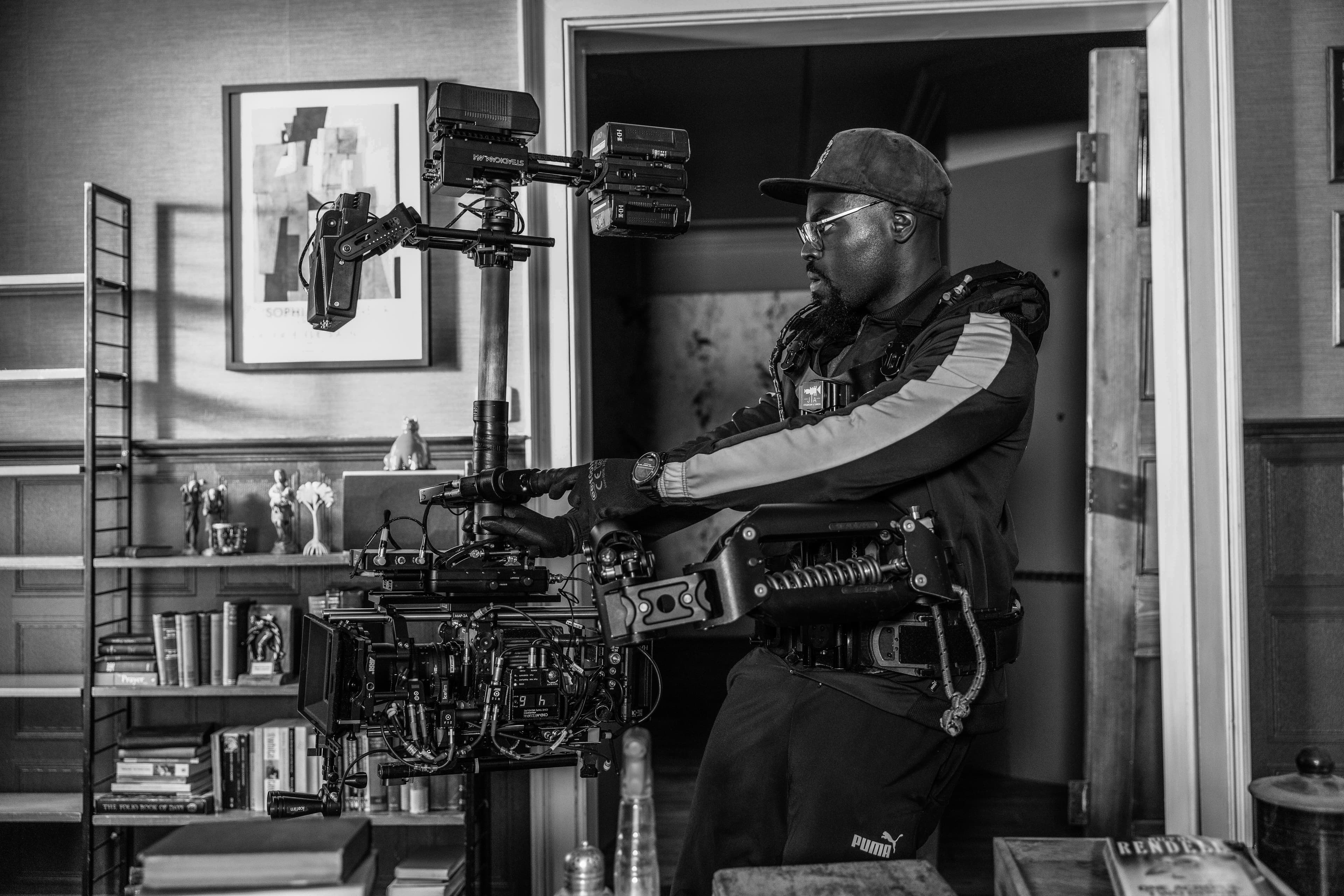
Steadicam Specialist
Creating seamless, flowing camera movements that bring cinematic vision to life
Expertise & Capabilities
With over 15 years of dedicated Steadicam operation, I bring a unique combination of technical precision and artistic sensibility to every project. My approach focuses on serving the story while pushing the boundaries of what's possible with stabilized camera movement.
Notable Projects & Achievements
My Steadicam work has been featured in award-winning productions across multiple formats. From intensive long-take sequences to intricate choreographed moves, I've worked alongside world-class directors and cinematographers to create memorable moments.
Specialized In:
- •Feature films requiring extended oner shots
- •High-octane action sequences
- •Music videos with dynamic movement
- •Commercial work with product tracking
- •Behind-the-scenes documentary style
“"The Steadicam is more than a tool—it's an extension of the storyteller's vision. Every shot is a choreographed dance between operator, camera, and subject."”
The History of Steadicam
From revolutionary invention to essential filmmaking tool


In the early 1970s, cinematographer Garrett Brown invented the Steadicam, a groundbreaking camera-stabilizing system designed to smooth handheld shots. Its feature debut came in Bound for Glory (1976), followed by iconic use in Rocky and The Shining. Over the decades, Steadicam has become an essential filmmaking tool, continually refined and manufactured by Tiffen.
Brown's path to invention began in childhood and evolved through early filmmaking experiments, frustration with shaky handheld footage, and a desire to free the camera from dolly tracks. After multiple prototypes, he perfected a system that allowed smooth tilting, panning, and operator movement. A demo reel of "30 impossible shots" quickly caught Hollywood's attention, earning praise from Stanley Kubrick and leading directly to Brown shooting the famous Rocky steps sequence.
Steadicam's breakthrough moment came with Haskell Wexler's landmark shot in Bound for Glory, where Brown stepped off a crane and followed David Carradine through a crowd in one continuous take. Brown soon patented the device (1977) and received an Academy Award for Technical Achievement (1978).
Garrett Brown's Legacy
Across his career, Brown operated Steadicam on more than 100 films, including The Shining, Raging Bull, Indiana Jones and the Temple of Doom, and Return of the Jedi. He later invented SkyCam (1979), the cable-suspended aerial camera system used in sports broadcasting, earning further recognition from AMPAS and multiple industry halls of fame.
Reflecting on his career, Brown credits timing, curiosity, and luck for enabling him to transform the way movies are made.